Unexpected Business Strategies That Helped Robot Vacuum Lidar Achieve Success
Lidar Technology Elevates Robot Vacuum Cleaners The introduction of lidar to robot vacuum cleaners has opened up an entirely new world of intelligent and adaptable cleaning. Lidar can be used to navigate as well as obstacle avoidance, and optimizes cleaning paths. It operates by emitting laser beams and determining the amount of time it takes for them to reflect off objects before returning to the sensor. This information is used to build an accurate map of the surroundings. Accuracy and Precision Lidar technology has been a game-changer in the world of robot vacuum cleaners, transforming them to intelligent, flexible household companions. It allows them to map spaces with great accuracy and precision, enabling them to navigate efficiently and avoid obstacles without difficulty. In comparison to other navigation technology like cameras and gyroscopes. Lidar is superior in performance and reliability. It works in a very simple method: The sensors of the robot emit laser beams that reflect off objects in the room. Based on the time it takes for these laser beams to return to the sensor, the robot will determine the distance between it and the objects in the room. The robot then creates a live detailed map of the surrounding. This is the reason Lidar-equipped robots, such as the TESLA Smart Robot Vacuum Laser amazing obstacle detection capabilities, easily crossing low thresholds and avoiding stairs without missing a beat. Once the robot has an entire map of the space and the surrounding area, it utilizes that map to plan its cleaning route. This results in an efficient, more planned, and thorough cleaning. In contrast, robots with no Lidar navigation tend to follow a random cleaning pattern, ping-ponging from one area to the next. Like every other technology that are used in the field, the lidar system has its limitations. The ability of the lidar system to detect reflective or transparent surfaces such as mirrors and glass is one of the biggest concerns. These surfaces can be mistaken as an obstacle-free area, which can cause the robot to move over them and damage the table. Another concern is the vulnerability of lidar to side-channel attacks, like attacks that exploit acoustic signals transmitted by the sensors. These attacks can be used to listen in on private conversations, or to collect sensitive information like passwords and credit card numbers. Overall, the advantages of lidar-equipped robots make them a wise option for anyone looking to improve the cleanliness of their home and ease of use. It's important to consider the pros and cons of every option before selecting one that best suits your requirements. Cleaning Strategies Adaptive A robot vacuum cleaner should be able to navigate through obstacles while traveling through your home. Lidar technology has made this possible making robotic vacuum cleaners into intelligent household companions instead of simple cleaning tools. Consumers are increasingly selecting devices with advanced navigation capabilities, and are recognizing the value of precision, efficiency, and flexibility. While many robot vacuums are equipped with obstacle sensors, Lidar adds another layer of precision to the process of navigation. It can measure distances by analyzing the time taken for laser pulses bounce off surfaces before returning to the sensor. This information allows it to change its course in real time if it encounters an obstruction or wall. Lidar is when combined with vision sensors that can detect transparent or reflective surfaces, is able to detect a wider range of objects and surface textures. It can also be used to aid the robot in avoiding areas it has already cleaned. This ensures that every room in your home is given its fair share. Other kinds of sensors can improve the navigation capabilities of a vac, as well. Cameras can provide data that helps the device recognize obstacles and objects that are in its path. This data can assist the robot to navigate in a safe manner, avoiding objects such as toys or other fragile objects. Cameras can also aid in establishing virtual boundaries, or no-go zones in a room to ensure that the device doesn't accidentally bump into or damage furniture or other objects. In addition to obstacles, a robot needs to be able recognize floor surface patterns and changes in texture. Vision sensors are used to determine the position of surface features using algorithms and cameras. The sensors can generate a map and floor plan for the robot to move more efficiently. Other sensors can help improve a vacuum's navigation, including cliff sensors and obstacles detection. Cliff sensors are a crucial safety feature that prevents the robot from falling down stairs or other dangerous surfaces. These sensors detect infrared light reflective of obstacles and are able to be detected on the vacuum's sensor. Infrared signals are utilized for obstacle detection to detect obstructions in the ground. These signals are sent by the robot's bumpers, and cause the vacuum to steer away from an object. Mapping and Memory When it comes to determining the effectiveness of a robot vacuum testing for straight-line cleaning only tell part of the story. It is also crucial to think about how a robot can navigate your space and plan its cleaning routes. Many buyers opt for a robot that has mapping capabilities that use Light Detection And Ranging (lidar). Lidar-enabled robotic devices use spinning laser sensors in order to scan their surroundings, and then create digital maps. This allows them to identify furniture, walls, and other objects, as well as determine their distance from the robot. The maps can then be used to create more efficient cleaning paths. 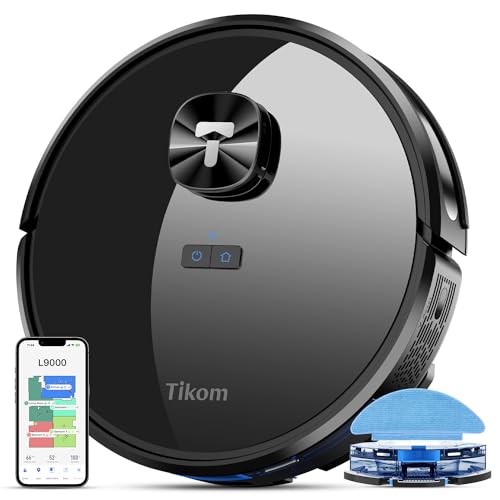 These robots can create detailed maps of a single floor or an entire multi-level home, and they are able to adapt to dynamic environments like moving furniture or temporary obstacles. They are also able to recognize a variety of surfaces and objects, including floorings, carpets tiles, and many more. They may be unable to recognize dirt, dust or other small particles. Lidar navigation can reduce the amount of time needed for robots to complete a task. This is because it allows more precise obstacle detection and navigation, which ultimately results in shorter runtimes. Furthermore, a more precise map of your home can result in less redundancy and redundant work which in turn cuts down on running costs. Lidar isn't the only mapping technology utilized in robotic vacuums. However it is among the most advanced. Many models combine technologies like CVSLAM (ceiling-vision-based simultaneous mapping and location) with an upward-facing camera to see their surroundings. These systems can overcome a few of the limitations of gyroscope- and accelerometer mapping, such as the inability to recognize height and the presence narrow obstacles such as bookcases. Some robotic vacuums also feature an internal memory that can recall the layout of your home, making them easier to use without relying on a remote control. They may also detect obstacles that are repeated and adjust themselves to eliminate them. This is especially helpful for pet owners who have messes, which are difficult to differentiate from normal dirt and other debris based on sensor data alone. Integration with Smart Home Ecosystems Modern smart vacuum robots equipped with Lidar navigation systems can seamlessly integrate into the home's ecosystems. They are able to communicate with connected devices such as your home security system or smart bulbs. lidar robot vacuum and mop can also use data analytics to continuously enhance their performance, enhancing cleaning routes and adjusting to changing conditions. They can also use voice commands to allow you to use them hands-free and without needing your attention. It lets them follow cleaning routes that are designed for space and cover all areas of a space efficiently, with a minimum of repetition of movements. This saves battery power and time, and helps ensure that every inch of your living space is cleaned thoroughly. Lidar-based robots are more efficient than budget models that rely on the traditional bump-and-move navigation technique. This is due to the fact that they don't use up energy by moving little left or right to navigate around obstacles, as they do using their standard bump sensor. They can avoid obstacles with their precise mapping abilities which makes them more efficient than conventional robot vacuums. Lidar-based systems are much more precise than traditional sensors such as infrared or ultrasonic sensors, allowing robots to avoid navigating over furniture and objects multiple times which means less suction power. They also have higher accuracy than camera-based mapping which can be difficult to navigate in dense areas and may require lots of configuration and calibration. Finally, Lidar-based systems can connect to your home's smart devices and platforms, making them easy to control with AI assistants such as Alexa or Google Assistant. This allows you to designate specific areas for cleaning or set up virtual boundaries to stop your robot from entering certain areas, ensuring a complete and seamless cleaning process. If you're looking for a reliable and efficient method to clean your home there's no better option than a robot equipped with Lidar navigation. This feature will cost you some extra money however it will allow you to make the most of your robot vacuum.